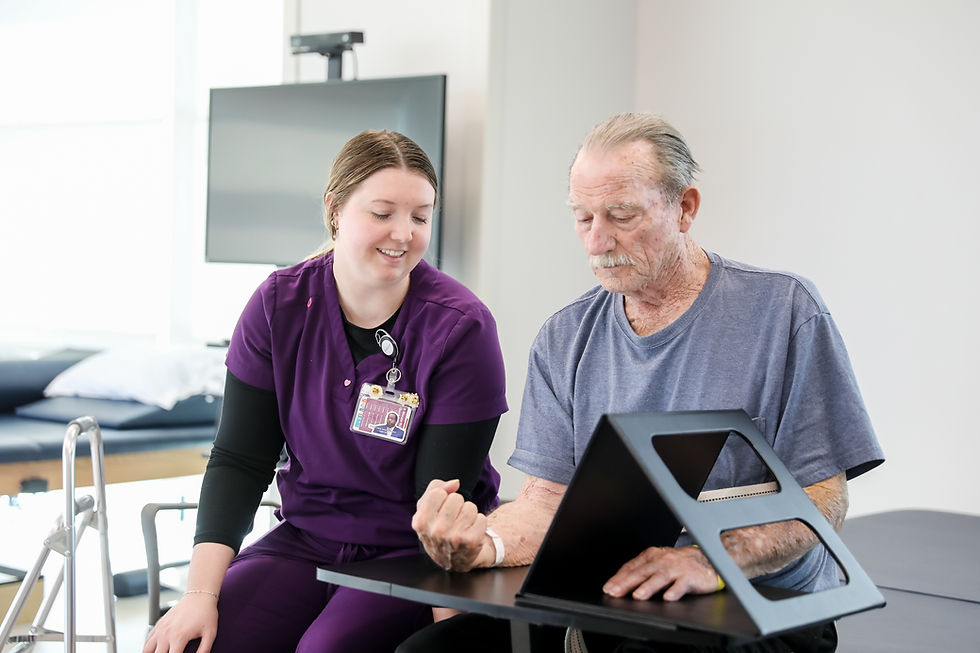
Neurological Rehabilitation: Regaining Independence for Patients with Parkinson’s and Other Neurologic Conditions
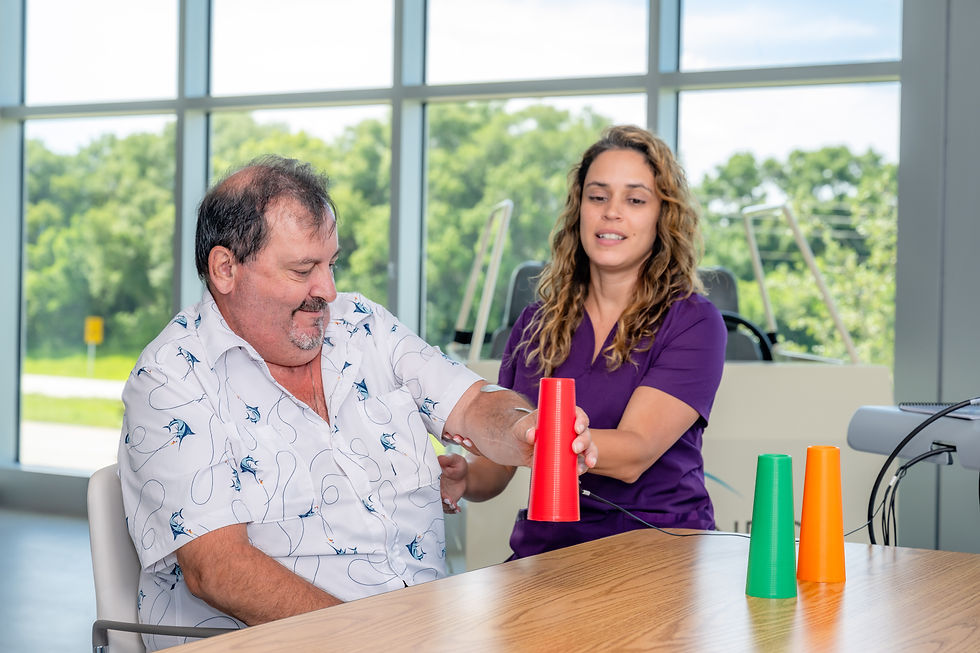
Many health problems can impair the nervous system, like the conditions noted:
Vascular disorders: stroke, bleeding in the brain, or transient ischemic attacks (TIAs)
Trauma: brain and spinal cord injury
Degenerative disorders: Parkinson’s disease, multiple sclerosis, amyotrophic lateral sclerosis (ALS), Alzheimer's disease, and Huntington’s disease.
Structural or neuromuscular disorders: Bell's palsy, cervical spondylosis, carpal tunnel syndrome, brain or spinal cord tumors, peripheral neuropathy, such as Guillain-Barré syndrome and nerve pain, muscular dystrophy, and myasthenia gravis
Episodic disorders: headaches, seizures, and dizziness
Infections: meningitis, encephalitis, polio, and brain abscesses
When a neurological condition affects daily functions such as dressing, eating, and overall mobility, a person’s ability to be independent can be significantly limited. Simple movements, such as standing or balancing, may become harder and can lead to feelings of helplessness for loved ones and caregivers.
Understanding Parkinson’s Disease and the Need for Neurological Rehabilitation
Parkinson’s disease is a progressive neurological disorder that affects movement, balance, and coordination. It develops when nerve cells in the brain that produce dopamine, an important neurotransmitter for controlling movement, begin to deteriorate.
Common symptoms include:
Tremors or shaking in the hands, arms, legs, or face
Stiffness or rigidity of the limbs and trunk
Slowness of movement (bradykinesia)
Impaired balance and coordination
Changes in speech or handwriting
Fatigue and reduced endurance
While Parkinson’s disease currently has no cure, early and ongoing medical rehabilitation plays a critical role in maintaining function, reducing complications, and improving overall quality of life. The goal of Parkinson’s disease rehabilitation is not only to manage symptoms but also to empower patients to live as independently and actively as possible.
Specialized Neurological Expertise and Training
Neurological rehabilitation helps people with diseases, injuries, or impairments of the nervous system. Rehabilitation can improve function, ease symptoms, and improve a person's well-being. Our therapy team brings advanced neurological rehabilitation expertise to every treatment plan. Medical rehabilitation for Parkinson’s disease and other neurological conditions demands a deep understanding of how neurological damage impacts movement patterns, reflexes, and coordination.
Our interdisciplinary team includes:
Physical therapists, who focus on restoring mobility, balance, and strength
Occupational therapists, who help patients relearn daily tasks and adapt their environment for safety and independence
Speech-language pathologists, who address speech and swallowing difficulties often associated with neurological conditions
Rehabilitation nurses, who provide around-the-clock care, support and education
Physiatrists (rehabilitation physicians), who oversee the overall plan of care
Physicians specializing in neurology, neuropsychology, and internal medicine
Case managers, who serve as your advocate at our hospital, work with our rehabilitation clinicians and prepare you to return to your community with support and resources
Dietitian, who ensures your nutrition matches your plan of care and any limitations in swallowing and digesting nutrition
Our hospital is equipped with a therapy gym and specialized neurological rehabilitation equipment, including balance systems, gait trainers, and robotic-assisted devices, to enhance therapy outcomes. These tools enable patients to safely practice real-life movements, thereby providing the highest opportunity to improve their strength, coordination, and confidence.

Individualized Plans of Care
Every patient’s journey with Parkinson’s disease and any neurological condition is unique, which is why we design personalized plans of care based on each individual’s condition and goals.
Our hospital team provides education and resources to patients, families, and caregivers on how to set up the safest home environment for optimal mobility. Key components of our individualized neurological rehabilitation program include:
Strength and flexibility exercises tailored to each person’s abilities
Endurance training to help patients rebuild stamina and energy
Speech and cognitive therapy to address communication and memory challenges
Caregiver education to support a loved one’s continued recovery at home
Balance and coordination training to reduce fall risk
Gait therapy to help retrain the brain and muscles to walk safely and efficiently
Functional task training to help with dressing, bathing, cooking, and other activities of daily living
Building confidence in supporting a loved one safely at home is a key component of our caregiver education. We help patients and caregivers alike learn how to use assistive devices or adaptive equipment effectively. Whether it’s a walker, a grab bar, or a home modification, our team helps individuals learn how to use what may appear as complicated equipment, simply to facilitate their return home.
A Focus on Positive Neurological Outcome Measures
Our team works closely with patients and families to set realistic, meaningful goals, then meets regularly to evaluate results, discuss barriers, and adjust the plan of care as needed.
We measure success not only through clinical outcomes but also through functional improvements that matter most to each patient. Examples of goals may be any of the following, depending on the severity of the condition:
Increasing energy and endurance
Improving overall health and mobility
Regaining the ability to walk independently
Performing self-care activities without assistance
Reducing the frequency of falls
Returning to meaningful hobbies and social activities
Medical rehabilitation is physical and emotional. Our hospital rehabilitation team fosters an encouraging environment that celebrates progress, no matter how small, and motivates each patient to keep moving forward.
Life After Inpatient Rehabilitation
Rehabilitation does not end when a patient leaves our hospital. The rehabilitation care team ensures a smooth transition back to the community through education for our patients, their families, and caregivers. We provide support as needed upon discharge from our hospital, including additional therapy, home health services, and other community resources.
Contact Us for Neurological Rehabilitation. If you or a loved one is living with Parkinson’s disease or another neurologic condition, we are here for you with our extensive neurological rehabilitation services. Speak with our admissions specialists to start the process. A sk your physician for a referral or we will help guide you through the physician referral and insurance processes if needed.